Why Only 13% of Companies Succeed With Data: Insights From MIT’s Latest Study

Shweta Singh
April 25, 2025 8 Min Read
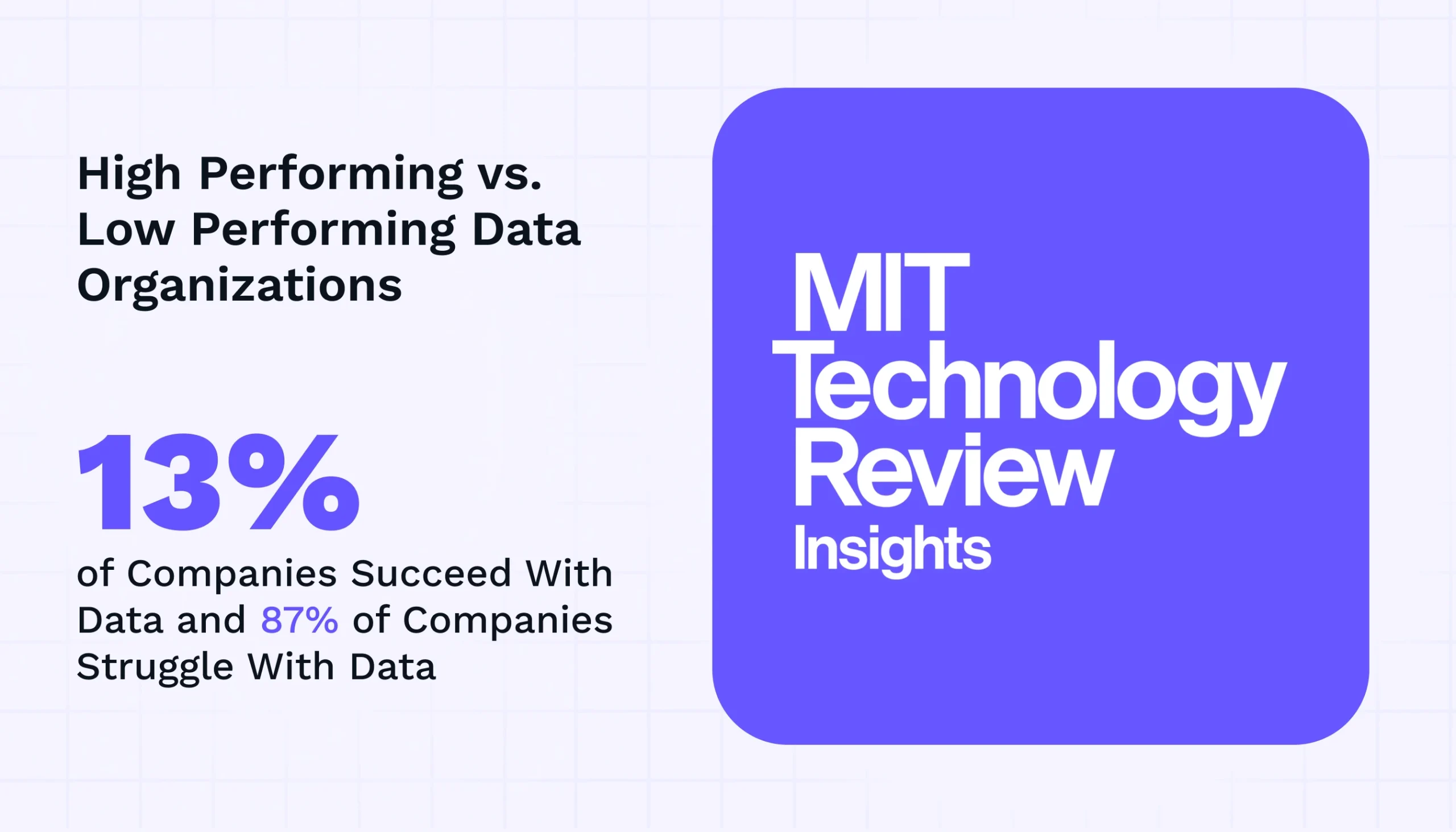

New research from MIT Technology Review and Databricks on building high-performance data and AI organizations shows a sharp divide. Only a small group of companies — just 13% — are getting real, measurable value from their data strategies. Everyone else is struggling.
These organizations (the other 87%) are running into roadblocks: messy data infrastructure, limited skilled resources, tools that don’t really work well together, and AI projects that never make it past the pilot stage. So, instead of seeing real impact, they’re stuck with big goals on paper, growing pressure from stakeholders, and little to show for it in practice.
Let’s unpack what top performers are doing differently and how we at Savant are helping data teams close the gap.
If you’re leading data or analytics at any level, this will probably feel familiar. The tools are more advanced than ever. The expectations are higher than ever. But the outcomes? They’re still lagging.
The MIT study was a good pulse check. It surveyed over 350 senior data and technology leaders to understand how companies manage data, scale analytics, and build AI capabilities. What stood out wasn’t the technology itself, but the widening gap between intent and execution.
Most organizations say they want to be data-driven, but only 13% of them are actually delivering measurable business value from their data strategy.
The challenges aren’t surprising: tool sprawl, data silos, and dashboards that don’t drive decisions. But the study also highlighted something more useful — what the high performers are doing differently.
That part hit home for us because it aligns closely with what we see on the ground and what we’re trying to help solve.

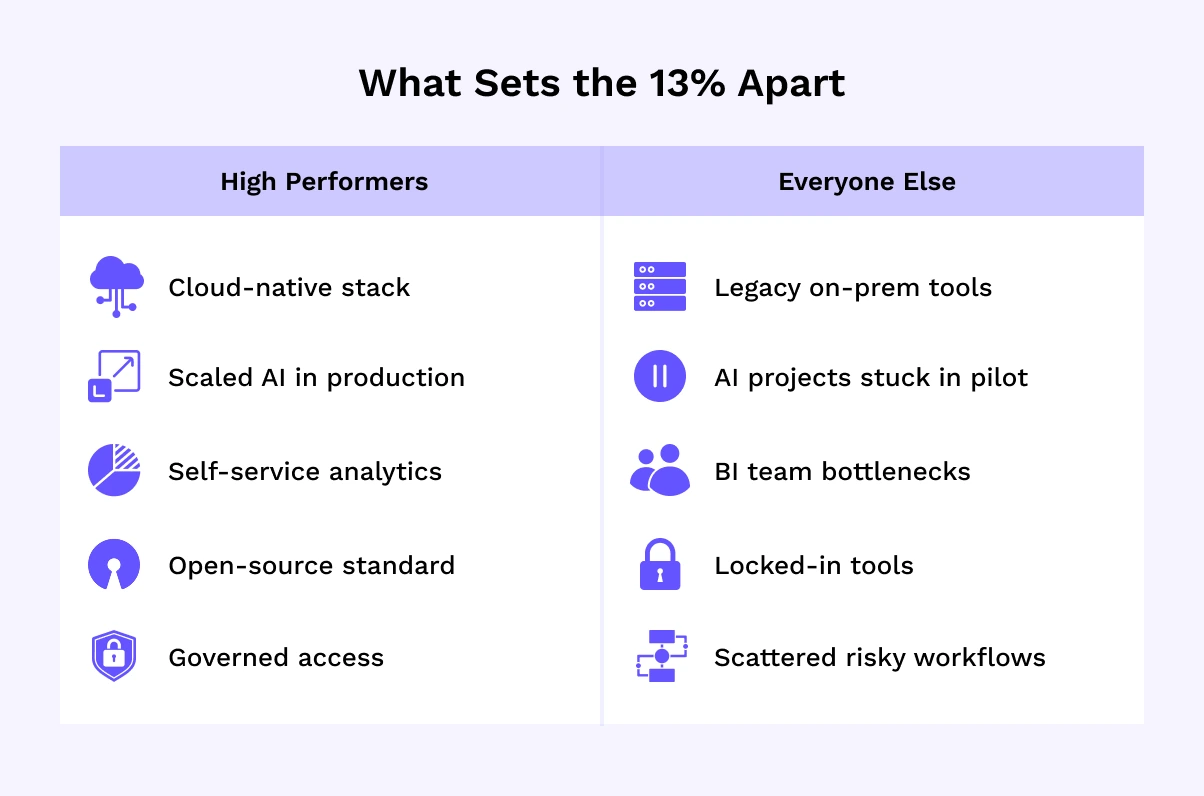
The study found a small group of companies delivering consistent, enterprise-wide results from their data programs. These are the high performers.
One of the biggest differences is in infrastructure. These organizations are running modern, cloud-native platforms. They aren’t limited by legacy systems or technical debt. With cloud services widely adopted in their architecture, they have the flexibility and compute power to support advanced workloads like real-time analytics and machine learning. Their architecture gives them the flexibility to support advanced analytics, AI use cases, and real-time data access — at scale.
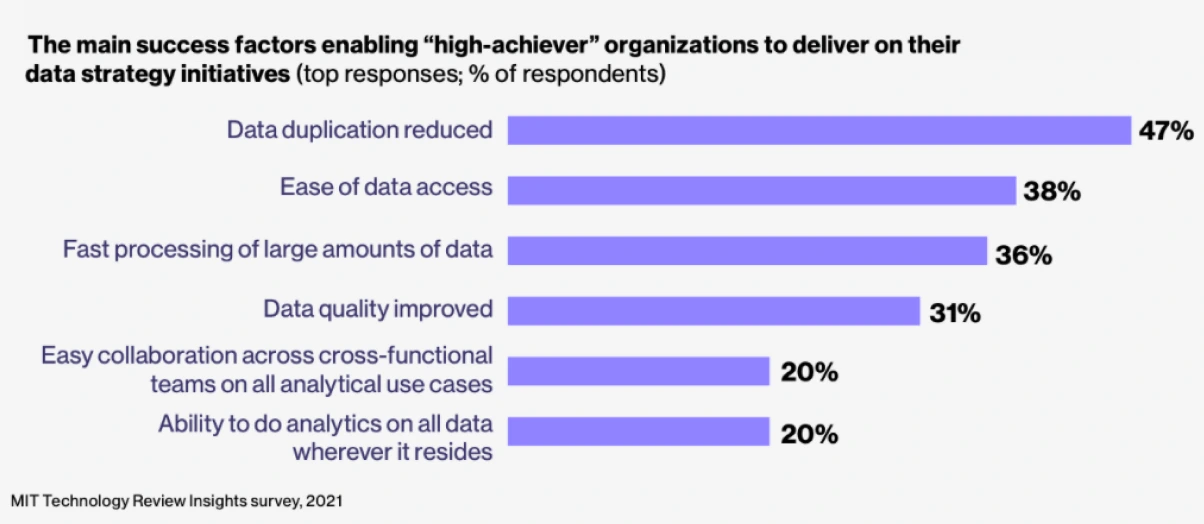
Data accessibility is another key theme. High-performing teams have reduced duplication and improved access. They’ve established a strong data foundation with governance processes in place to ensure that the right people can access the right data quickly and confidently. That clarity around data access enables speed and builds trust in the insights being generated.
These organizations also invest heavily in self-service analytics. Rather than relying on a central data team for every request, they empower business teams to explore, analyze, and act on data directly. That reduces bottlenecks and distributes insight generation across the company.
Finally, they lean into open standards. Open formats and frameworks help avoid vendor lock-in and create a more interoperable architecture. Such openness makes it easier to scale, onboard new tools, and future-proof the stack.
Meanwhile, most other organizations are dealing with the opposite. Many are still stuck with legacy infrastructure. Their data is scattered across siloed tools. Their analytics depend on a few specialized users. And when self-service spreads without governance, it creates risk and chaos.

The cloud was supposed to make things easier. So was AI. So were modern BI tools.
But the reality is, most organizations are still dealing with complexity that undermines these technologies.
Data silos remain a major blocker. When data lives in disconnected systems, teams struggle to get a complete view of performance or act on it quickly. It slows everything down — from reporting to decision making to model training.
Tool sprawl is another pain point. Teams often use too many platforms that don’t integrate well. This leads to duplicated work, inconsistent metrics, and extra time spent on coordination.
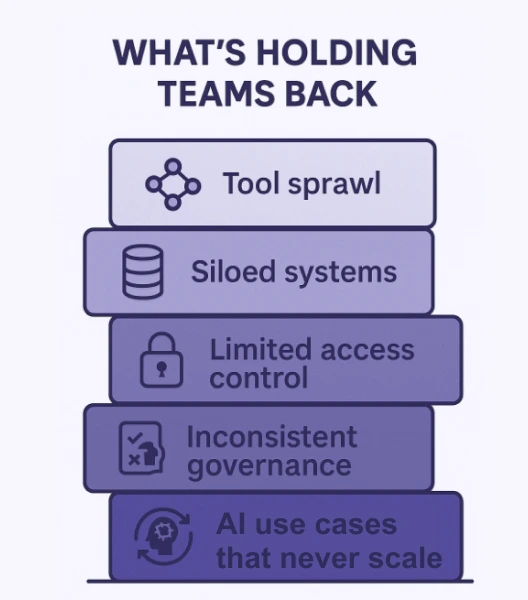
Analytics workflows often remain concentrated among a few technical users. That means the business is constantly waiting on someone else to pull data, clean it, and deliver insights.
Even with AI on the roadmap, teams struggle to operationalize it. Most companies lack a unified system to manage and scale AI workflows. Advanced models or automations get stuck in pilot phases.
Governance is another concern. When self-service grows without the right controls, it becomes hard to track who’s using what data, how models are performing, or whether the insights are trustworthy. That’s when trust in data starts to erode.
The study showed that top teams are focused on scalability and access. That matters. But we believe the bigger shift is in how analysts actually get work done.
The opportunity now is to make analysts faster, more independent, and more effective through a combination of agentic AI, LLMs, and analytics automation that’s built directly into their workflows.
LLMs play a central role here. They power natural language interfaces that let analysts generate logic, transform data, and automate workflow steps without code. When combined with agentic AI — systems that can carry out multi-step tasks — and analytics automation, they unlock a new level of speed and flexibility.
This isn’t about experimenting with AI in isolated pilots. It’s about putting it to work safely, consistently, and at scale.
That means enabling analysts to:
This is where the industry is headed. Not just faster, but also better governed and more collaborative.
 Changing the membership charge rate: This allows businesses to adjust the subscription price and see how it affects their state sales tax liabilities.
One of the strongest insights from the MIT study is this: Democratizing analytics only works if it’s done responsibly.
That means having clear access controls. Trusted data sources. Reusable assets. And explainable models — not black-box outputs.
In other words, the answer isn’t “lock everything down” or “open everything up.” It’s finding the right balance such that business users can move quickly, but data leaders stay in control.
That’s the balance we’ve built into Savant. Business teams can work independently, while data leaders have visibility into usage, model performance, and data quality.
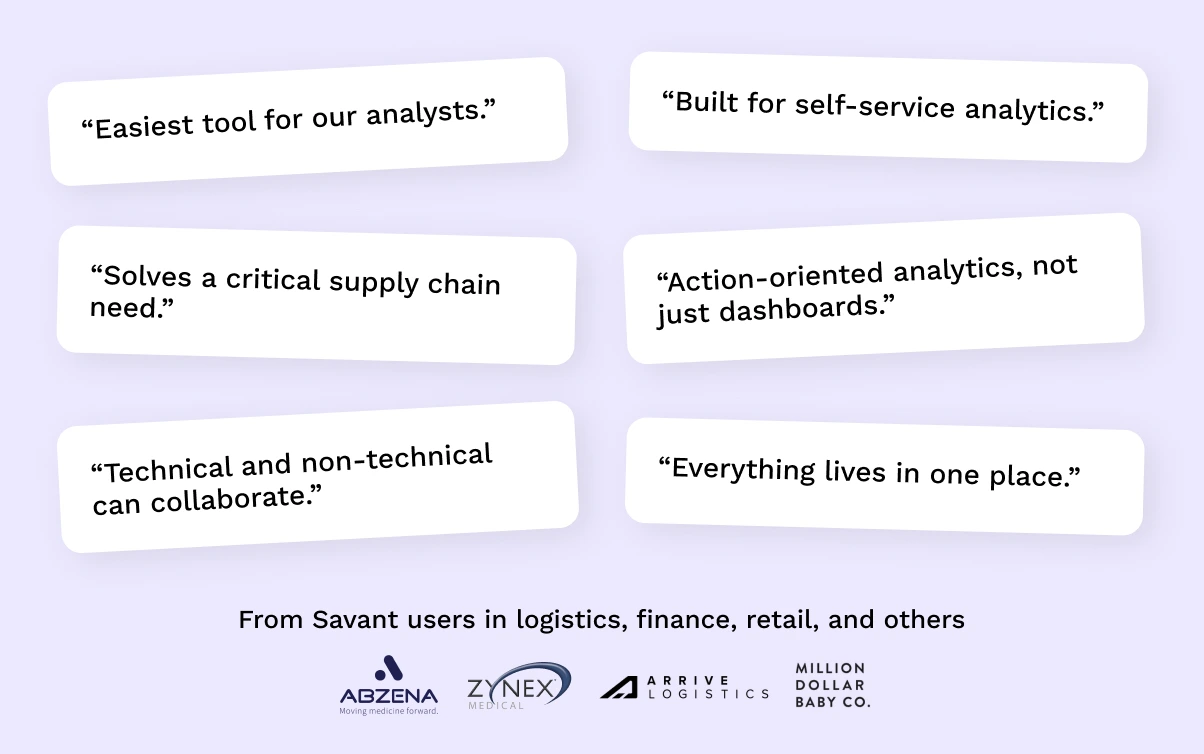
The MIT-Databricks study validated what we’ve been seeing on the ground and hearing from our customers.
High-performing data teams aren’t just investing in more tools or bigger teams. They’re simplifying how work gets done. They empower analysts to do more. They govern at scale without slowing things down. And they close the gap between insight and action.
It’s not easy. But it is achievable.
At Savant, we believe analysts should be at the center of the data experience. That’s why we’re building tools that help them automate workflows, scale insights, and stay fully governed — without needing to write code or get blocked by request queues.
At Savant, collaboration, automation, and governance are built in, not bolted on.
You don’t need 10 new tools or 20 new hires. You need a platform that does the hard stuff for you and gets out of the way when it matters.
We’ve built exactly that — a platform that’s easy to adopt, cost effective to scale, and designed for the analysts who power your business, without a six-month overhaul or hiring spree.
If you’re trying to move faster, reduce overhead, and become one of the 13%, let’s talk.
We’d love to show you what we’re building and how we can help your analysts do more with less friction. Get a walkthrough of what Savant can do — schedule a quick demo of Savant’s analytics automation platform.